
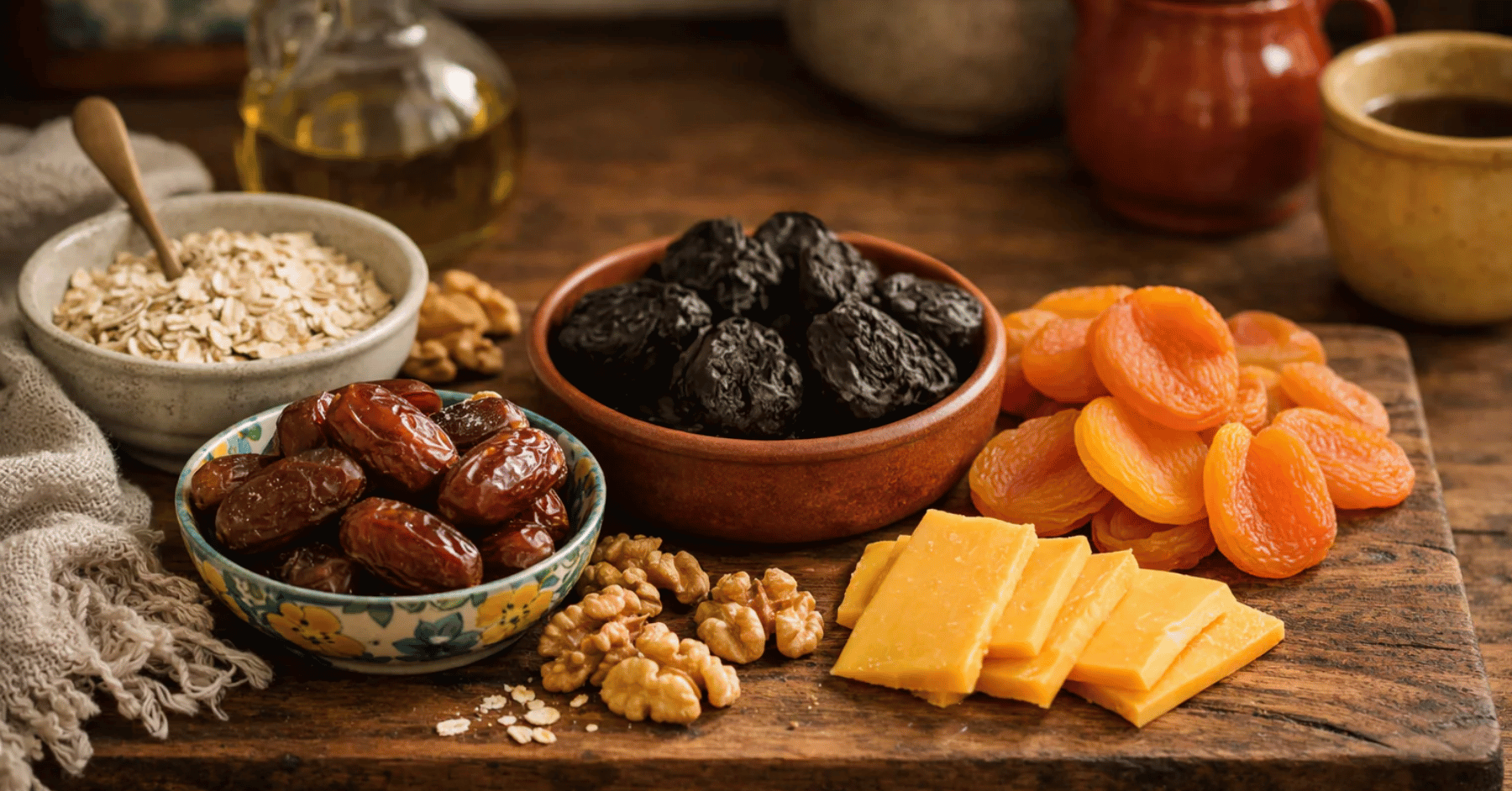
Dried guava, dried mango, unsweetened pitted prunes and sultana raisins are among the lowest-sugar dried fruits you’ll find on a Malaysian pantry shelf — none has added sugar, and all deliver real fruit sweetness in a shelf-stable, travel-friendly snack. The trick to keeping any dried fruit genuinely “low sugar” is choosing unsweetened varieties and watching your portion, since drying naturally concentrates the fruit’s own sugars.
What “Low Sugar” Really Means for Dried Fruit
All dried fruit is naturally sweet — the drying process removes water, which concentrates the fruit’s own sugars into a smaller bite. That’s different from added sugar, where syrup or sugar coating is mixed in on top of what the fruit already has. When Malaysians look for “low sugar” dried fruit, what they usually mean is fruit with no added sugar — just the fruit, dried.
Reading the label matters more than the fruit type. Words like “unsweetened,” “no added sugar,” or a short ingredient list (just the fruit name, sometimes with a preservative) are the giveaway. A dried fruit is a source of dietary fibre, and choosing the unsweetened version means you’re getting that fibre without the extra sugar hit.
7 Low-Sugar Dried Fruits Worth Keeping in Your Pantry
- Dried Guava (from RM23.29) — tangy-sweet with a chewy bite, and one of the more fibrous dried fruits around. A good starting point if you’re new to low-sugar snacking.
- Dried Mango (from RM18.98) — the fruit sugar is concentrated, so a few slices go a long way. Look for the unsweetened cut if you want the lowest-sugar version.
- USA Pitted Prune (Unsweetened) (from RM22.50) — no added sugar by name, and the pit is already removed, which makes it an easy grab-and-go option.
- Sultana Raisin (from RM6.86) — small, portable, and the most budget-friendly of the bunch. Sultanas are naturally sweeter tasting than they are sugar-dense, so a small handful stretches further than you’d expect.
- Dried Apricot (from RM16.88) — a tarter option than mango or raisins, with a firmer chew that slows down how fast you snack through a bag.
- Dried Longan (from RM19.22) — a Malaysian favourite with a honey-like flavour that comes through even without added sugar.
- Dried Red Dates (Seedless) (from RM9.46) — commonly used in soups, but just as good eaten on its own or added to tea for natural sweetness.
How to Snack on Them Without Overdoing the Sugar
Even sugar-free dried fruit is still concentrated fruit, so portion is what actually keeps it “low sugar” in practice. A small handful — roughly 30g, about the size of a golf ball if piled up — is a commonly used serving size for dried fruit, and it’s enough to satisfy a sweet craving without turning into a full bag.
Pairing dried fruit with a handful of unsalted nuts (roasted cashews, almonds, or a mixed pack from our Premium Selection Nuts range) adds protein and unsaturated fats to the mix, which tends to make the snack more filling than fruit alone.
In Malaysia’s humidity, dried fruit softens and clumps fast once a pack is opened. Reseal it in an airtight container or a zip-lock bag with the air pressed out, and keep it away from direct sunlight — a desk drawer or kitchen cupboard works better than the top of the counter. Most unsweetened dried fruit keeps well for several weeks this way; refrigerating extends it further if you buy in bulk.
If you have a nut or peanut allergy, check the packaging of mixed dried fruit products, since some are processed in facilities that also handle nuts.
FAQs
Is dried fruit actually low in sugar?
It depends on the product. Dried fruit always contains the fruit’s own natural sugar, concentrated by the drying process. What varies is whether sugar or syrup has been added on top — unsweetened varieties like plain dried guava, mango, or pitted prunes have no added sugar, while some coated or candied dried fruit does.
Which dried fruit has the least sugar?
Among unsweetened options, tarter fruits like dried guava and dried apricot tend to taste less sweet than mango or raisins, though exact sugar content varies by batch and fruit type. Checking the nutrition label on the specific product is the most accurate way to compare.
Can I eat dried fruit if I’m watching my sugar intake?
Unsweetened dried fruit in a controlled portion is a reasonable choice for most people watching their sugar intake, as part of a balanced diet. If you have diabetes or another condition that requires closer monitoring of sugar intake, check with your doctor or a dietitian for guidance specific to you.
How much dried fruit should I eat a day?
A small handful, around 30g, is a commonly used serving size for dried fruit. Since drying concentrates the fruit’s sugars into a smaller volume, it’s easy to eat more than you’d realise, so sticking to a measured portion rather than snacking straight from a large bag helps.
How should I store dried fruit in Malaysia’s climate?
Keep it in an airtight container away from direct heat and sunlight once opened. Malaysia’s humidity softens and clumps dried fruit quickly if it’s left exposed, so resealing after every use — or moving it to the fridge for longer storage — keeps texture and flavour better for longer.
What’s the difference between dried and freeze-dried fruit?
Dried fruit is dehydrated slowly with heat, which shrinks it and concentrates its natural sugars into a chewy texture. Freeze-dried fruit is frozen and has its moisture removed under vacuum, which keeps it light and crisp rather than chewy. Sugar content in both comes from the fruit itself, not the drying method.
Ready to stock up? Browse the full Low Sugar Dried Fruits range for real RM prices and unsweetened options delivered across Malaysia.