
Among everyday nuts and seeds, pumpkin seeds carry the most protein, at about 9g in a 30g handful, while almonds and sunflower seeds give around 6g and cashews about 5g. That makes the protein in nuts and seeds a handy top-up for snacks and breakfasts, as part of a balanced diet. Below is a simple side-by-side comparison, plus easy ways to fit them into a Malaysian day.
How Much Protein Is in Nuts and Seeds?
Most common nuts and seeds give roughly 4g to 9g of protein per 30g serving, depending on the type. Seeds generally sit at the higher end, while richer, oilier nuts such as walnuts and macadamias sit lower.
The figures below are approximate and based on standard nutrient entries in USDA FoodData Central, scaled to a 30g portion (about a small handful). Exact values vary a little by variety and roasting.
| Nut or seed (30g) | Approx. protein | Texture and taste |
|---|---|---|
| Pumpkin seeds | about 9g | Flat, green, mildly nutty |
| Almonds | about 6g | Firm, crunchy, lightly sweet |
| Sunflower seeds | about 6g | Small, soft crunch, savoury |
| Roasted chickpeas | about 5–6g (check pack label) | Light, crisp, snacky |
| Cashews | about 5g | Creamy, buttery |
| Walnuts | about 4–5g | Soft, slightly bitter, rich |
For a sense of scale, one large egg gives about 6g of protein, so a handful of almonds or sunflower seeds lands in a similar range.
Which Nuts and Seeds Have the Most Protein?
Pumpkin seeds come out on top in this everyday line-up, with almonds and sunflower seeds close behind. Here is how the main options compare in real use.
Pumpkin seeds: the protein leader
Pumpkin seeds (pepitas) are the easiest way to add more plant protein to a snack. Their mild flavour works in both sweet and savoury food, from muesli to fried rice. Our Raw Pumpkin Seed starts from RM16.13, and if you prefer them ready to eat, Roasted Pumpkin Seed starts from RM12.33.
Almonds: the all-rounder
Almonds are a source of protein, fibre and vitamin E, and they hold their crunch well in a snack tin or drawer. Raw Almond starts from RM18.91 and can be eaten as-is, lightly toasted at home, or chopped over breakfast.
Roasted chickpeas: the crunchy alternative
Chickpeas are a legume rather than a nut, but roasted ones snack just like nuts and add protein and fibre to the mix. Roasted Chickpeas start from RM17.98 and are a lighter-feeling option for people who want a crunchy savoury bite.
Cashews and walnuts: lower protein, still worth eating
Cashews and walnuts give a little less protein per handful, but they bring their own strengths: cashews are creamy and kid-friendly, while walnuts are known as a source of plant omega-3 fats. Protein is one reason to choose a nut, not the only one.
Is the Protein in Nuts and Seeds Enough on Its Own?
Nuts and seeds are a useful plant protein snack, but they work best alongside other protein foods rather than replacing them. A 30g handful gives a few grams of protein together with a fair amount of energy, so eating much larger amounts to chase protein is not practical.
The Harvard T.H. Chan School of Public Health describes nuts, seeds and legumes as good plant sources of protein within a varied diet. Pairing them with foods like tofu, tempeh, eggs, fish, dhal or milk is an easy way to spread protein across the day.
If you train regularly and want a deeper look, our guide to high-protein nuts and seeds for bodybuilders covers larger appetites and gym routines.
Easy Ways to Add Nuts and Seeds to a Malaysian Day
The simplest approach is to add a small handful to meals and snacks you already eat. A few ideas that suit local routines:
- Breakfast: stir a spoonful of pumpkin seeds into oats, muesli or yogurt.
- Office snack: keep a small tub of almonds or roasted chickpeas in your drawer instead of reaching for a kuih from the pantry every afternoon.
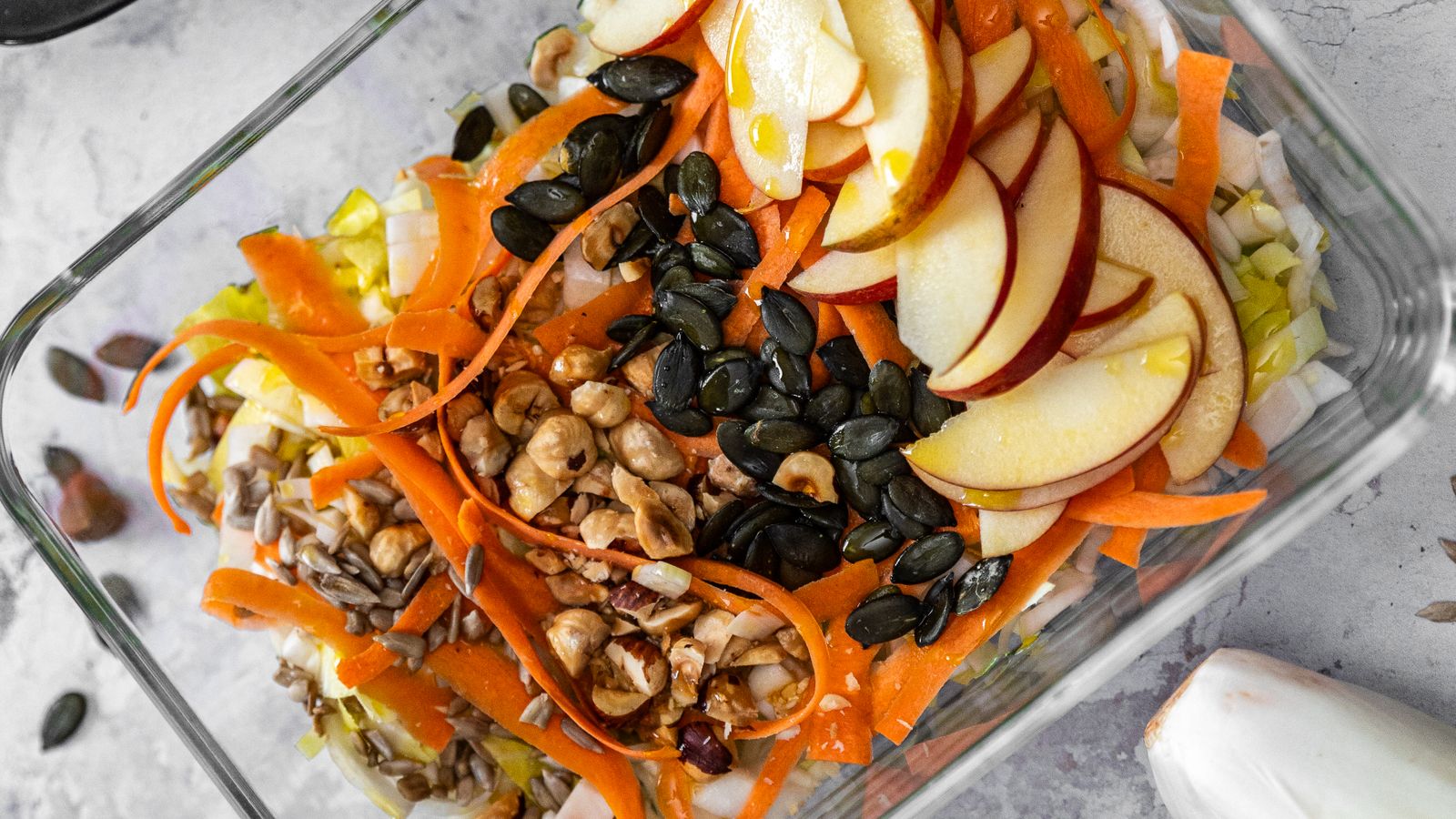
- Lunch: scatter toasted seeds over fried rice, noodles or a salad for extra crunch.
- Tea break: pair a few nuts with a piece of fruit instead of a second biscuit.
How much should you eat?
About 30g a day, or a small handful, is a sensible everyday portion. Pre-portioning into small containers makes it easier to stick to. For a visual guide, see how much is one serving of nuts.
Storing nuts and seeds in Malaysian humidity
Heat and humidity make nuts and seeds go soft or stale faster. Keep them in an airtight container away from the stove and direct sun, and move larger packs to the fridge once opened. Seeds, with their thinner shells removed, are especially quick to lose their crunch if left open on the counter.
A quick note on allergies: nuts and seeds are common allergens. If you or someone you are sharing with has a nut or seed allergy, check with them before offering any snack mix.
FAQs
Which nuts have the most protein?
Among common nuts, almonds are one of the higher-protein choices, at about 6g per 30g. If you include seeds, pumpkin seeds lead with about 9g per 30g. Cashews and walnuts give a little less, at about 4g to 5g.
Are pumpkin seeds high in protein?
Yes, for a snack food. Dried pumpkin seed kernels give about 9g of protein in a 30g handful, which is more than most nuts. They are easy to add to breakfast bowls, salads and stir-fries.
How much protein is in a handful of almonds?
A small handful of almonds, about 30g or 20 to 24 nuts, gives roughly 6g of protein. That is similar to one large egg.
Can nuts and seeds replace meat or eggs for protein?
They are better as a top-up than a full replacement. Nuts and seeds add useful plant protein, but they are also energy-dense, so most people get their protein from a mix of foods such as legumes, tofu, eggs, fish or dairy, with nuts and seeds alongside.
Are roasted chickpeas a good protein snack?
Roasted chickpeas are a legume snack that provides both protein and fibre, usually around 5g to 6g of protein per 30g depending on the recipe. Check the pack label for exact figures.
Ready to build your own protein-friendly snack jar? Browse the full Seeds and Grains range at Morrista.