

Granola is rolled oats and other grains baked with oil and a sweetener like honey until they clump into crunchy, golden clusters. Muesli is raw rolled oats mixed with nuts, seeds and dried fruit, never toasted, so it stays loose, pale and light. That one difference in processing — baked versus raw — is what drives almost every other gap between them, from texture to calories to how long a jar lasts in the pantry.
How Granola and Muesli Are Actually Made
Granola starts as rolled oats tossed with oil and a liquid sweetener such as honey, sometimes with nuts or seeds mixed in, then baked until it turns golden and clumps into clusters. That baking step is what gives granola its signature crunch and its longer, toastier flavour. Granola Honey (DIY) follows this method, priced from RM9.37 for a 200g pack.
Muesli skips the oven entirely. It’s simply raw rolled oats mixed with dried fruit, nuts and seeds, sold as-is with no added oil or baking. That’s why muesli looks paler and flatter in the packet than granola’s clustered chunks. Original Muesli is the plain version at RM6.78 for 80g, while Matcha Muesli (from RM7.75) adds a green tea twist for anyone who wants more flavour without switching to granola.
Texture, Sugar and Calories: The Real Differences
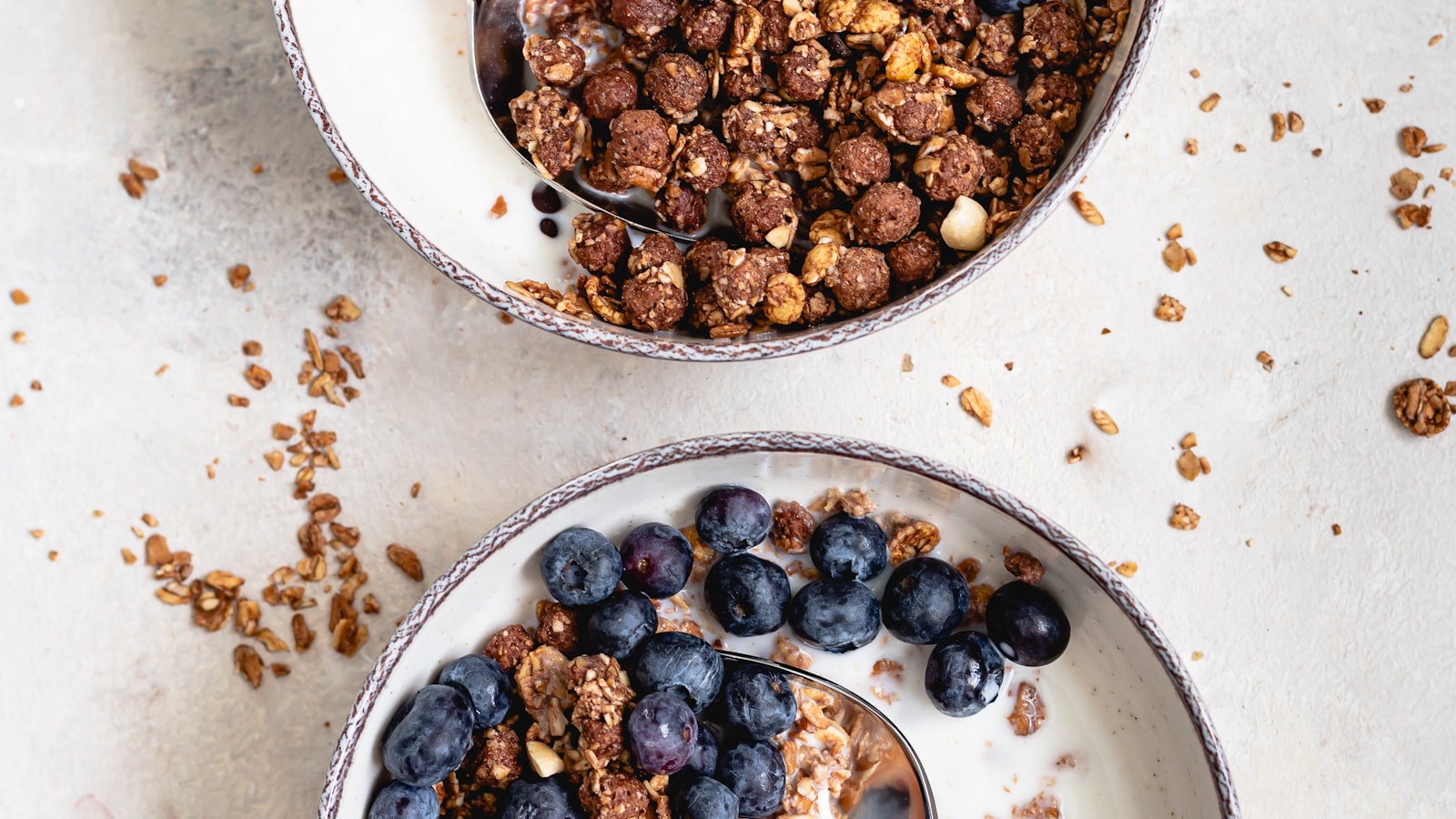
- Texture: Granola forms crunchy clusters that hold their bite even under milk or yogurt for a while. Muesli stays as loose flakes and softens quickly once liquid is added — which is the whole point if you’re soaking it Bircher-style.
- Added oil and sugar: Granola’s crunch comes from oil and honey baked into every cluster, so it carries added fat and sugar by design. Muesli is typically just oats, nuts, seeds and dried fruit with nothing added, so any sweetness comes from the dried fruit itself.
- Calories per serving: Gram for gram, granola tends to run higher in calories than muesli because of that baked-in oil and honey. Muesli is generally the lighter option at the same portion size.
- Shelf texture: Granola stays crunchy in a sealed pack for months. Muesli is meant to soften once you add milk, yogurt, or leave it soaking overnight — it’s not designed to stay crisp the way granola is.
Both start from the same base ingredient — rolled oats, a source of dietary fibre — so neither is automatically the “healthier” pick. It comes down to how much added oil and sugar ends up in the specific product you buy, which is worth a quick check on the ingredient label regardless of which one you choose.
Which One Fits Your Morning?
Granola works best when you want something ready to eat straight away — a handful in a bowl with milk, sprinkled over yogurt, or eaten dry as a crunchy snack at your desk. Its cluster shape also makes it easy to portion into small pouches ahead of time. Muesli suits mornings when you’re happy to plan a step ahead: soak it in milk or yogurt overnight and it turns into a soft, oat-based breakfast similar to overnight oats, or eat it dry if you prefer more chew than granola’s crunch. If you want a flavoured option without the added oil of granola, Matcha Muesli is a middle ground worth trying.
Storing Granola and Muesli in Malaysia’s Heat and Humidity
Both keep best in an airtight container in a cool, dry cupboard, away from direct sunlight and the stove. Malaysia’s humidity is the main enemy for granola specifically — moisture in the air softens those crunchy clusters faster than in a drier climate, so reseal the pack tightly after every use rather than leaving it open on the counter. Muesli is a little more forgiving since it isn’t meant to stay crisp, but the nuts and dried fruit inside can still turn chewy or take on stray kitchen smells if left unsealed. Either way, check the pack for its best-before date and finish it within that window for the best texture.
FAQs
What is the main difference between granola and muesli?
Granola is rolled oats baked with oil and a sweetener like honey until it forms crunchy clusters. Muesli is raw rolled oats mixed with nuts, seeds and dried fruit with no baking, so it stays loose and light.
Is granola or muesli healthier?
Both are a source of dietary fibre from rolled oats, so neither is automatically better. Granola typically has more added oil and sugar because it’s baked with honey, while muesli usually has no added fat. As part of a balanced diet, the better pick depends on the ingredient label and your portion size rather than the category alone.
Can I eat muesli without soaking it first?
Yes — muesli can be eaten dry as a snack or straight with cold milk. It will be chewier than granola since the oats aren’t toasted, but soaking isn’t required.
Does granola have more sugar than muesli?
Generally yes, since granola clusters are bound with honey or syrup before baking, while muesli usually has no added sweetener beyond the natural sugar in its dried fruit. Recipes vary between brands, so it’s worth checking the ingredient label if sugar content matters to you.
What’s a normal serving size for granola or muesli?
About 40–50g, roughly half a cup, is a typical serving for either — similar to a standard rolled oats portion.
Can I mix granola and muesli together?
Yes, mixing the two is common if you want granola’s crunch alongside muesli’s lighter texture and dried fruit in the same bowl.
Ready to stock your breakfast pantry? Shop Granola Honey (DIY), Original Muesli, Matcha Muesli, and the rest of the Fuel for Breakfast range.